
News
m6 walsall birmingham lanes closure Triggers Travel Chaos

Introduction
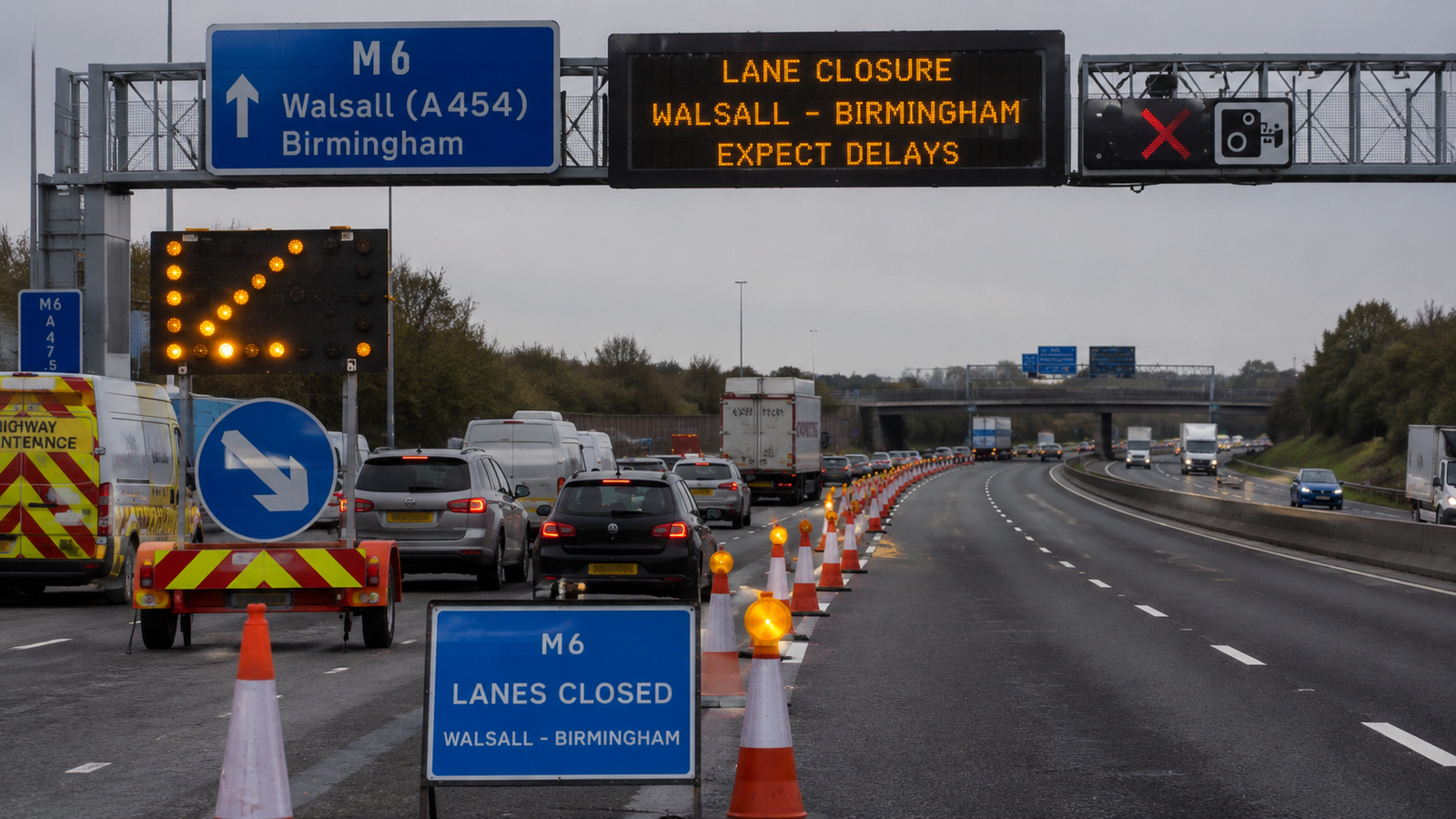
The m6 walsall birmingham lanes closure has become a major concern for commuters, freight operators, and residents across the West Midlands. Few motorway routes in the United Kingdom carry as much daily pressure as the M6 corridor between Walsall and Birmingham. When lane closures occur along this heavily used section, the disruption spreads far beyond the motorway itself, affecting local roads, business schedules, emergency services, and public transport connections.
Drivers traveling through the region have faced growing frustration due to congestion, delayed journeys, and unpredictable traffic flow linked to the m6 walsall birmingham lanes closure. While motorway repairs and maintenance are often necessary for safety reasons, repeated closures raise broader questions about infrastructure pressure, road capacity, and the challenge of maintaining one of Britain’s busiest transport routes.
The situation also reflects a larger national issue. Across the UK, aging motorway infrastructure is struggling to cope with modern traffic demand. Vehicles are heavier, freight movement has increased significantly, and urban growth around major motorway corridors continues to place additional stress on road systems originally designed decades ago.
The m6 walsall birmingham lanes closure is therefore more than a routine traffic management issue. It highlights how essential motorway networks have become to economic activity and daily life throughout the Midlands.
What Is m6 walsall birmingham lanes closure
The m6 walsall birmingham lanes closure refers to traffic restrictions, lane reductions, or temporary closures affecting sections of the M6 motorway between Walsall and Birmingham. These closures are usually introduced for roadworks, emergency repairs, bridge maintenance, resurfacing projects, accident recovery operations, or infrastructure upgrades.
The M6 is one of the most important motorways in the United Kingdom, linking major cities, industrial regions, and freight routes across England. The stretch running through Walsall and Birmingham experiences especially heavy traffic due to its location within the densely populated West Midlands region.
When lanes are closed on this section of motorway, congestion develops quickly because traffic volumes remain high throughout most hours of the day. Even small reductions in road capacity can create long delays extending into nearby junctions and local roads.
The m6 walsall birmingham lanes closure often affects commuters traveling to Birmingham city centre, freight vehicles moving goods across the Midlands, and drivers connecting to nearby motorways such as the M5, M42, and M54.
Why the M6 Faces Constant Pressure
The M6 motorway has long been considered one of the busiest and most heavily strained road networks in Britain. The m6 walsall birmingham lanes closure becomes particularly disruptive because this motorway already operates under extremely high traffic demand during both peak and non-peak periods.
Several factors contribute to this pressure. Birmingham sits at the centre of England’s transport network, making the surrounding motorways essential for regional and national movement. Freight transport companies rely heavily on the M6 to move goods between northern England, the Midlands, and southern distribution centres.
Population growth across the West Midlands has also increased commuter traffic significantly. Areas surrounding Walsall, Birmingham, Wolverhampton, and nearby towns have expanded rapidly over recent decades, leading to more daily motorway usage.
Another issue involves road design limitations. Much of the M6 was originally constructed for traffic conditions far lighter than those seen today. Although upgrades and smart motorway systems have been introduced in some sections, demand often continues to exceed available capacity.
The m6 walsall birmingham lanes closure therefore creates disruption not simply because lanes are closed, but because the motorway is already operating close to its limit under normal conditions.
Impact on Daily Commuters
For commuters, the m6 walsall birmingham lanes closure can transform routine journeys into stressful and unpredictable experiences. Drivers traveling to work often face long queues, sudden delays, and diversion routes that increase journey times considerably.
Many workers living outside Birmingham rely on the M6 for daily access to offices, industrial sites, hospitals, and commercial areas. When lane closures occur, congestion quickly spreads into surrounding roads as drivers attempt to avoid motorway traffic.
This creates secondary problems for local communities. Residential streets not designed for heavy traffic become overcrowded with diverted vehicles. Public transport services may also experience delays because buses and coaches share the same congested routes.
The psychological impact of repeated motorway delays is often overlooked. Long commuting times increase stress, reduce personal time, and create uncertainty around work schedules. Drivers stuck in traffic for extended periods may also experience increased fatigue and frustration, especially during poor weather or nighttime closures.
The m6 walsall birmingham lanes closure affects not only transport efficiency but also the overall quality of daily life for thousands of people across the region.
Economic Consequences of Lane Closures
Motorway disruptions have direct economic consequences, particularly on heavily used freight corridors like the M6. The m6 walsall birmingham lanes closure affects delivery schedules, supply chains, fuel costs, and business operations throughout the Midlands.
Freight companies depend on predictable travel times to maintain efficient logistics. Delays caused by congestion force drivers to spend more time on the road, increasing fuel consumption and reducing delivery reliability. Businesses waiting for goods or components may also face operational disruption if transport schedules become inconsistent.
Retail operations can be affected as well. Delayed deliveries impact stock management, particularly for businesses relying on rapid transportation systems. Construction companies, manufacturing plants, and distribution centres throughout the Midlands are especially dependent on reliable motorway access.
The wider economy also suffers from lost productivity. Hours spent in traffic represent time that could otherwise be used for work, transport efficiency, or commercial activity.
The m6 walsall birmingham lanes closure demonstrates how infrastructure problems on one motorway section can influence economic activity far beyond the immediate area.
Smart Motorways and Public Debate
One important aspect connected to the m6 walsall birmingham lanes closure is the ongoing debate surrounding smart motorway systems. Parts of the M6 have been upgraded using technology-based traffic management systems designed to improve traffic flow without widening the motorway significantly.
Smart motorways use variable speed limits, overhead lane controls, and hard shoulder running to increase capacity. Supporters argue these systems improve efficiency and reduce congestion during busy periods.
However, critics have raised concerns about safety, especially when vehicles break down in live traffic lanes. Several high-profile incidents across the UK have intensified public scrutiny of smart motorway operations.
The m6 walsall birmingham lanes closure sometimes becomes more complicated when smart motorway technology, emergency repairs, and lane management systems interact during traffic incidents or maintenance work.
Public confidence in motorway safety increasingly depends on how effectively authorities manage closures, communicate disruptions, and maintain safe traffic conditions during periods of heavy congestion.
Why Roadworks Often Last So Long
Drivers frequently question why motorway repairs require extended lane closures. The m6 walsall birmingham lanes closure may appear excessive from a driver’s perspective, but motorway engineering projects are often highly complex beneath the surface.
Road surfaces endure enormous stress from continuous traffic, especially heavy goods vehicles. Over time, repeated pressure damages the underlying road structure, not just the visible surface layer. Repairs often involve excavation, drainage work, resurfacing, barrier replacement, bridge inspections, and utility maintenance.
Safety regulations also limit how quickly work can proceed. Crews operate close to fast-moving traffic, requiring protective barriers, controlled working hours, and carefully managed construction zones.
Weather conditions can further delay progress. Rain, freezing temperatures, or poor visibility sometimes prevent certain repair operations from continuing safely.
The m6 walsall birmingham lanes closure reflects the difficult balance between maintaining critical infrastructure and minimizing disruption for road users.
Traffic Diversions and Local Community Effects
When motorway lanes close, traffic rarely disappears. Instead, vehicles spread into surrounding road networks. The m6 walsall birmingham lanes closure has repeatedly increased pressure on local roads through Walsall, Birmingham, and nearby communities.
Drivers attempting to avoid motorway delays often use residential routes or smaller roads never intended for heavy traffic volumes. This creates congestion near schools, shopping areas, and residential neighbourhoods.
Noise levels also increase significantly during prolonged closures. Residents living near diversion routes may experience constant traffic movement throughout the day and night, particularly when overnight motorway closures redirect vehicles into urban areas.
Emergency services can face additional challenges as congested roads slow response times. Ambulances, fire services, and police vehicles may struggle to move efficiently through heavily affected areas.
The m6 walsall birmingham lanes closure therefore impacts far more than motorway users alone. Local communities often experience secondary effects that continue long after the original roadworks are completed.
The Challenge of Maintaining Britain’s Motorways
The m6 walsall birmingham lanes closure represents a broader national challenge involving infrastructure maintenance across the United Kingdom. Much of Britain’s motorway system was built decades ago during periods of lower traffic demand and different economic conditions.
Today, road networks face heavier vehicles, larger freight volumes, and growing urban populations. Continuous usage places enormous pressure on road surfaces, bridges, drainage systems, and safety barriers.
Governments and transport authorities face difficult decisions regarding investment priorities. Expanding motorway capacity is expensive, politically sensitive, and environmentally controversial. At the same time, failing to maintain infrastructure creates safety risks and economic disruption.
Modern motorway management increasingly focuses on balancing repair work with traffic efficiency. Authorities attempt to schedule closures during quieter periods, but on roads as busy as the M6, there are few truly quiet times.
The m6 walsall birmingham lanes closure highlights the reality that maintaining aging infrastructure while keeping traffic moving is becoming one of the country’s most difficult transport challenges.
Public Frustration and Trust in Transport Planning
Repeated traffic disruption can weaken public confidence in transport planning. Many drivers affected by the m6 walsall birmingham lanes closure feel frustrated by long delays, inconsistent travel times, and limited alternative routes.
People often accept that road maintenance is necessary, but frustration increases when projects appear prolonged or communication feels unclear. Drivers want accurate updates regarding closure schedules, expected delays, and diversion advice.
There is also growing public concern about whether existing motorway systems are capable of supporting future demand. As populations grow and freight movement expands, many drivers believe congestion problems may worsen even after current roadworks are completed.
The m6 walsall birmingham lanes closure has therefore become part of a wider conversation about infrastructure investment, transport planning, and the long-term future of road travel in the Midlands.
Conclusion
The m6 walsall birmingham lanes closure is far more than a temporary inconvenience for drivers. It reflects deeper pressures affecting one of Britain’s most important motorway corridors. Heavy traffic demand, aging infrastructure, expanding urban populations, and ongoing maintenance needs have combined to create a transport system operating under constant strain.
For commuters, businesses, and local communities, the impact extends beyond delayed journeys. Congestion affects productivity, increases stress, disrupts local roads, and places additional pressure on surrounding transport networks.
The situation also highlights a difficult national challenge. Britain depends heavily on motorway systems built for a different era, yet maintaining and upgrading those networks while traffic continues flowing is increasingly complex and expensive.
The lessons from the m6 walsall birmingham lanes closure underline the importance of long-term infrastructure planning, effective communication, and continued investment in transport resilience. Without those efforts, disruptions on key motorway routes may become even more common in the years ahead.
FAQs
What is the m6 walsall birmingham lanes closure?
It refers to temporary lane restrictions or closures on the M6 motorway between Walsall and Birmingham due to roadworks, repairs, maintenance, or traffic incidents.
Why does the M6 experience so much congestion?
The motorway carries extremely high traffic volumes, including commuters, freight vehicles, and long-distance transport across the Midlands and beyond.
How do lane closures affect local communities?
Traffic often diverts onto nearby roads, causing congestion, increased noise, slower emergency response times, and disruption within residential areas.
Are smart motorways connected to the closures?
In some sections, smart motorway systems interact with lane management and traffic control during closures, repairs, or emergency incidents.
Will motorway congestion in the Midlands improve in the future?
Improvement depends on infrastructure investment, road maintenance planning, traffic management systems, and the ability to meet growing transport demand.

Introduction
The way people consume sports information has changed dramatically over the past decade. Fans no longer wait for newspapers or television broadcasts to learn about match results, player transfers, or tournament highlights. Instead, they rely on online platforms that provide instant access to breaking stories and live updates. Among the growing number of sports-focused platforms, fawa news has attracted attention from users looking for quick access to sports-related content and match information.
As sports audiences become increasingly global, platforms that aggregate news, scores, highlights, and discussions have gained significant popularity. The appeal of fawa news lies in its ability to connect sports enthusiasts with ongoing events across different leagues and competitions. Whether users are following football, basketball, cricket, or other major sports, the demand for real-time information continues to grow.
Understanding the role of fawa news requires looking beyond simple score reporting. It represents a broader trend in how sports information is delivered, consumed, and shared among fans who expect immediate updates from around the world.
What Is fawa news
Fawa news is commonly associated with an online sports information platform that focuses on delivering updates, scores, match coverage, and sports-related content to users. The platform has gained recognition among sports enthusiasts who seek quick access to current sporting events and developments.
Rather than functioning as a traditional media outlet, fawa news is often viewed as a content hub where users can explore sports updates, tournament information, and discussions surrounding major competitions. Its growing visibility reflects the increasing demand for platforms that make sports information accessible through mobile devices and online browsing.
The popularity of fawa news demonstrates how sports fans today value speed, convenience, and continuous access to information. In an era where matches take place across multiple continents every day, platforms capable of providing timely updates have become highly relevant.
The Growing Demand for Sports Information Platforms
Sports have evolved into a global entertainment industry that attracts billions of viewers annually. Major football leagues, international cricket tournaments, basketball championships, and other competitions generate constant interest from fans around the world.
This demand has created opportunities for platforms like fawa news to serve audiences seeking instant access to developments in their favorite sports. Traditional reporting methods often cannot keep pace with modern expectations. Fans want information while events are unfolding rather than hours later.
As mobile technology has become more widespread, sports followers increasingly depend on platforms that deliver updates directly to their devices. This shift has helped shape the environment in which fawa news operates and grows.
Why Sports Fans Use Fawa News
One reason many users are drawn to fawa news is convenience. Sports enthusiasts often follow multiple leagues, tournaments, and teams simultaneously. Accessing information from separate sources can be time-consuming and inefficient.
Platforms that bring together various sports updates in one place offer a more streamlined experience. Fans can quickly review results, match developments, and key stories without navigating numerous websites.
Another important factor is accessibility. Many users prefer platforms that present information clearly and efficiently. The ability to locate relevant sports content quickly contributes to the appeal of fawa news among its audience.
The Importance of Real-Time Updates
Speed has become one of the most valuable elements in sports reporting. During live matches, fan engagement often depends on receiving updates as events occur. Goals, wickets, touchdowns, and game-changing moments generate immediate interest.
Fawa news reflects this emphasis on real-time reporting by focusing on delivering information quickly to users. This approach aligns with modern viewing habits, where audiences expect instant notifications and ongoing coverage throughout competitions.
The demand for immediate updates extends beyond live matches. Transfer rumors, injury reports, coaching changes, and tournament announcements also drive significant engagement among sports fans. Timely reporting helps platforms remain relevant in a highly competitive information landscape.
How Fawa News Reflects Modern Sports Consumption
The rise of fawa news highlights broader changes in how audiences interact with sports content. Today’s fans often engage with sporting events through multiple channels simultaneously. They may watch a match while checking statistics, reading commentary, and discussing outcomes online.
This behavior has transformed sports media from a one-way communication model into a highly interactive experience. Fans expect constant engagement and access to supplementary information that enhances their understanding of the game.
Platforms such as fawa news fit naturally within this environment by serving as information resources that complement live viewing experiences. They provide context, updates, and insights that help users stay connected to their favorite sports.
Sports Coverage Beyond Match Results
Successful sports platforms do more than report final scores. They provide context that helps audiences understand the significance of events. Match analysis, team performance reviews, player developments, and competition standings all contribute to a richer experience.
Fawa news has attracted interest because sports audiences increasingly seek comprehensive coverage rather than isolated statistics. Fans want to understand why teams succeed, how players perform, and what developments may influence future competitions.
This broader approach transforms sports reporting into a more engaging experience. Information becomes meaningful when it helps audiences connect individual events to larger stories unfolding throughout a season or tournament.
Challenges Facing Modern Sports Platforms
Despite growing demand, sports information platforms face several challenges. Accuracy remains one of the most important concerns. In the race to deliver updates quickly, maintaining reliable reporting standards is essential.
Competition also presents a significant challenge. Sports fans have access to numerous information sources, ranging from official league channels to major media organizations. Platforms must continuously improve their offerings to remain relevant.
For fawa news, maintaining audience trust depends on balancing speed with accuracy. Users are more likely to return when they feel confident that information is reliable and presented responsibly.
The Role of Mobile Accessibility
Mobile devices have fundamentally changed how sports information is consumed. Fans now expect to access updates anytime and anywhere. Whether commuting, working, or traveling, users rely on smartphones to stay connected to sporting events.
The increasing importance of mobile accessibility has benefited platforms like fawa news. Quick-loading content, simple navigation, and responsive interfaces help meet the expectations of modern audiences.
This mobile-first environment has expanded the reach of sports platforms, allowing them to connect with users across different regions and time zones. As mobile technology continues to evolve, accessibility will remain a critical factor in platform success.
Community Engagement and Sports Culture
Sports have always been about more than competition. They create communities, inspire loyalty, and encourage conversation among supporters. Modern platforms play an important role in facilitating these interactions.
Fawa news exists within a broader ecosystem where fans seek opportunities to discuss matches, celebrate victories, and analyze performances. Community engagement enhances the overall value of sports information by transforming passive consumption into active participation.
The strongest sports platforms recognize that fans want more than updates. They want connection, discussion, and a sense of involvement in the stories surrounding their favorite teams and athletes.
The Future of Fawa News and Similar Platforms
The future of sports information platforms will likely be shaped by advancements in technology, audience behavior, and content delivery methods. Artificial intelligence, enhanced statistics, personalized recommendations, and interactive experiences may play increasingly important roles.
For fawa news, future growth will depend on its ability to adapt to changing user expectations. Fans continue to seek faster updates, deeper analysis, and more engaging experiences.
As sports continue expanding globally, the demand for accessible information platforms is unlikely to diminish. The ability to connect audiences with relevant content quickly and effectively will remain a valuable service in the sports industry.
Conclusion
Fawa news represents a modern approach to sports information delivery in an era defined by speed, accessibility, and continuous engagement. As audiences increasingly rely on online platforms for updates, match coverage, and sports-related content, services that provide timely information have become more important than ever.
The growth of fawa news reflects broader trends in sports media, where fans expect instant access to developments across multiple competitions and leagues. Beyond reporting scores, successful platforms contribute to a richer sports experience by providing context, analysis, and community engagement.
As technology continues to influence how sports content is consumed, platforms like fawa news will remain significant parts of the evolving sports information landscape. Their ability to connect fans with the moments that matter most ensures their relevance in a rapidly changing media environment.
FAQs
What is fawa news?
Fawa news is an online platform associated with sports updates, match information, and sports-related content for fans seeking timely coverage.
Why is fawa news popular among sports fans?
It provides convenient access to sports information, helping users stay informed about matches, results, and developments across various competitions.
Does fawa news focus on a single sport?
The platform is generally associated with multiple sports, allowing users to explore information from different competitions and leagues.
How does fawa news support real-time sports coverage?
It emphasizes quick updates and timely reporting, helping users follow ongoing events and important developments as they happen.
What makes platforms like fawa news important today?
They meet the growing demand for accessible, fast, and convenient sports information in a world where fans expect instant updates and continuous engagement.
Introduction
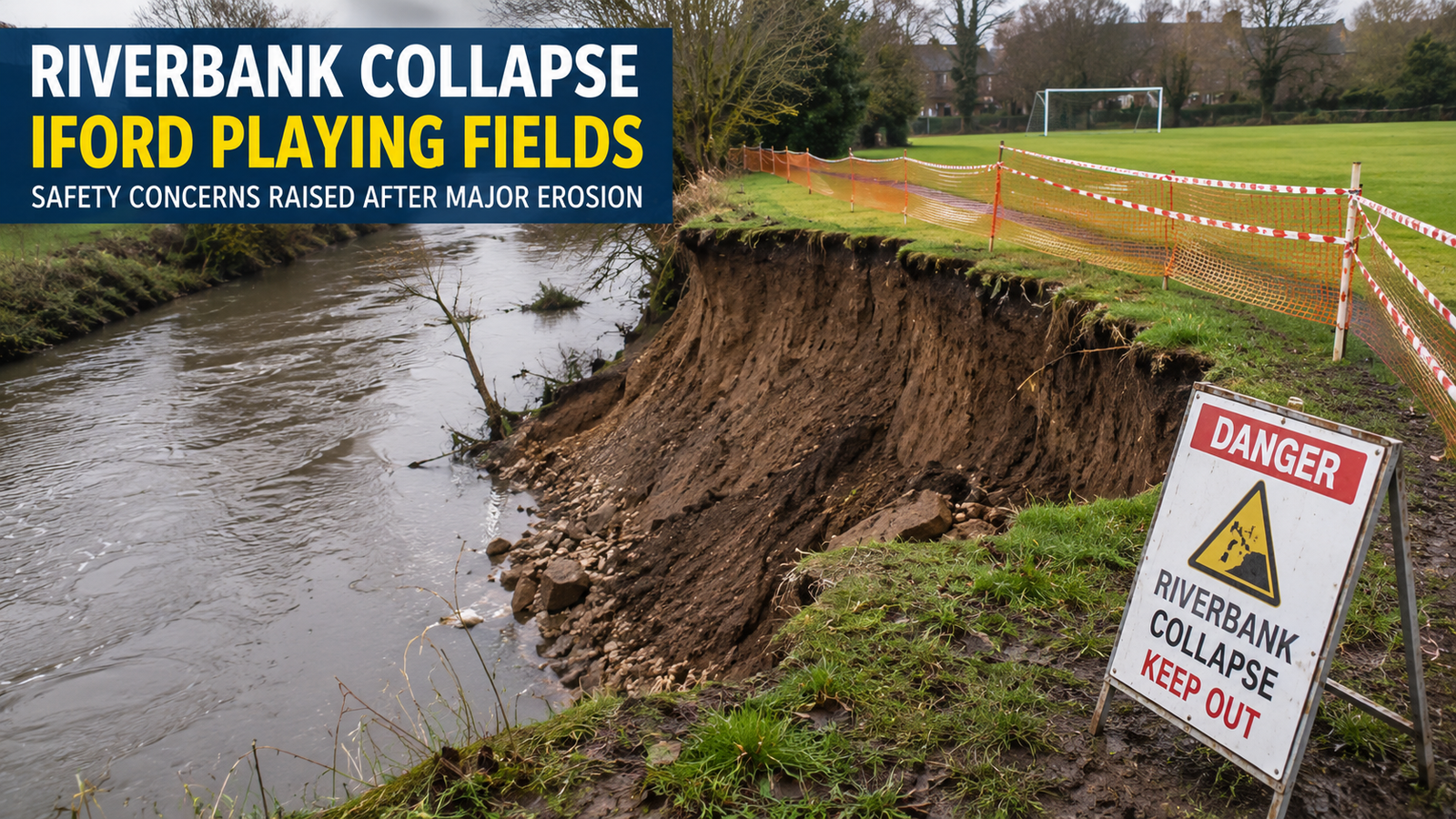
The riverbank collapse iford playing fields incident has raised serious concerns about environmental stability, public safety, and the growing pressure on river ecosystems in southern England. What initially appeared to be a localized ground failure soon became a wider discussion about erosion, flooding risks, infrastructure vulnerability, and the long-term condition of public recreational spaces built near waterways.
Residents familiar with Iford Playing Fields were shocked to see sections of riverbank suddenly give way, leaving unstable ground close to public areas regularly used by walkers, families, and sports groups. Incidents like the riverbank collapse iford playing fields are often misunderstood as isolated natural events, but in reality they usually develop over years through a combination of environmental stress, changing weather patterns, water movement, and weakened soil structure.
The collapse also highlighted how vulnerable riverside land can become when exposed to repeated flooding and erosion. Across Britain, riverbanks are increasingly under pressure from extreme rainfall, stronger currents, and unstable ground conditions linked to climate-related changes. Public spaces built beside rivers now face challenges that were less severe decades ago.
Beyond the visible damage, the riverbank collapse iford playing fields became important because it revealed deeper concerns about land management, environmental maintenance, and community safety. For local residents, the event was not simply about damaged land. It was about protecting public spaces that hold social, recreational, and environmental importance for the surrounding area.
What Is riverbank collapse iford playing fields
The riverbank collapse iford playing fields refers to the failure of a section of riverbank near Iford Playing Fields, where land beside the river became unstable and collapsed into the waterway. Riverbank collapse occurs when soil, vegetation, and supporting ground structures weaken to the point that sections of land can no longer resist the pressure created by water flow and erosion.
In the case of the riverbank collapse iford playing fields, the affected area reportedly showed signs of erosion and instability before the major ground failure occurred. Cracks in the soil, sloping ground, and weakening edges are often early indicators that a riverbank is becoming unsafe.
When a collapse happens near public spaces, the risks increase significantly. Areas used for walking, recreation, or sports can quickly become hazardous if the ground remains unstable. Authorities often respond by installing barriers, restricting access, and conducting engineering assessments to determine the extent of the damage.
The incident also drew attention because Iford Playing Fields serves as an important local green space. The collapse affected not only the appearance of the area but also concerns about long-term environmental stability and public safety around the river.
Why Riverbank Collapses Are Becoming More Common
The riverbank collapse iford playing fields reflects a larger environmental trend affecting rivers across the United Kingdom. Riverbank erosion and collapse are becoming increasingly common due to several interconnected factors.
One major cause is changing weather patterns. Intense rainfall events have become more frequent in many regions, leading to higher river levels and stronger water currents. Fast-moving water continuously wears away soil at the base of riverbanks, gradually weakening the land above.
Vegetation loss also contributes to instability. Tree roots and plants help hold soil together naturally. When vegetation is removed, damaged, or weakened, the riverbank loses important structural support. Even minor disturbances can eventually lead to large-scale collapse.
Human activity can worsen the problem as well. Construction near waterways, altered drainage systems, and increased foot traffic place additional pressure on already vulnerable land. In some areas, riverbanks were never designed to handle modern environmental conditions or increased public use.
The riverbank collapse iford playing fields demonstrates how these environmental pressures can combine over time. While the collapse may appear sudden, the weakening process likely developed gradually beneath the surface long before visible damage occurred.
Environmental Impact of the Collapse
The environmental consequences of the riverbank collapse iford playing fields extend beyond the immediate loss of land. River ecosystems are highly sensitive, and sudden ground failures can disrupt wildlife habitats, water quality, and natural river flow.
When a riverbank collapses, large amounts of soil and debris enter the water. This increases sediment levels, which can reduce oxygen availability for aquatic life and disturb fish habitats. Muddy water may also affect plant growth beneath the surface by blocking sunlight penetration.
Wildlife living near the river can experience habitat disruption as well. Birds, insects, and small mammals often depend on stable riverbanks for nesting, shelter, and feeding. A major collapse can destroy vegetation and alter the natural balance of the area.
The riverbank collapse iford playing fields also raised concerns about future erosion. Once a section of riverbank fails, nearby areas may become more vulnerable because the natural structure supporting adjacent ground has already been weakened.
Environmental experts often warn that repairing visible damage alone may not solve deeper stability problems. Long-term restoration usually requires careful soil reinforcement, vegetation management, and monitoring of river flow patterns.
Safety Concerns Around Iford Playing Fields
Public safety quickly became one of the biggest concerns following the riverbank collapse iford playing fields. Recreational areas located near unstable land create serious risks for visitors, especially children and families using the playing fields regularly.
Collapsed riverbanks can continue shifting after the initial failure. Ground that appears stable may still contain hidden cracks or weakened sections beneath the surface. This creates the possibility of additional collapses without warning.
Authorities often respond by restricting access to affected areas until engineers complete safety inspections. Temporary fencing and warning signs are commonly installed to prevent accidents near unstable ground.
The incident also highlighted how quickly public spaces can become hazardous when environmental systems fail. Many people associate playing fields with safety and recreation, not geological instability. However, riverside land always carries some level of natural risk, particularly during periods of heavy rainfall or flooding.
The riverbank collapse iford playing fields reminded local communities that environmental changes can directly affect public spaces people rely on for daily activities, exercise, and outdoor recreation.
The Role of Flooding and Water Pressure
Flooding plays a major role in many riverbank failures. During periods of high rainfall, rivers rise rapidly and place intense pressure on surrounding land. The riverbank collapse iford playing fields may have been influenced by repeated cycles of flooding and water saturation over time.
When soil becomes heavily saturated, it loses strength and stability. Water trapped inside the ground increases pressure between soil particles, making collapse more likely. At the same time, strong river currents erode the base of the bank, removing support from underneath.
This combination creates dangerous conditions. The upper section of the bank may still appear solid while the lower portion has already been weakened by erosion. Eventually, gravity causes the unsupported land above to collapse into the river.
Climate experts have increasingly warned that heavier rainfall events are placing older drainage and flood management systems under strain. Areas previously considered stable may now face greater environmental pressure than they did decades ago.
The riverbank collapse iford playing fields illustrates how water-related environmental risks are becoming more unpredictable and difficult to manage in many parts of the country.
Challenges of Riverbank Repair and Restoration
Repairing a damaged riverbank is rarely simple. The riverbank collapse iford playing fields likely requires detailed environmental assessment, engineering analysis, and long-term stabilization planning before permanent repairs can begin.
One challenge involves balancing safety with environmental protection. Engineers must stabilize the land without causing additional harm to the river ecosystem. Heavy construction near waterways can sometimes create further erosion if not managed carefully.
Another difficulty is identifying the full extent of the instability. Visible collapse areas may represent only part of the problem. Underground erosion and soil weakness can spread beyond the immediate damaged section.
Restoration projects often involve reinforcing the riverbank using natural and engineered methods together. Vegetation planting, soil stabilization materials, drainage improvements, and protective barriers may all become part of the repair strategy.
The riverbank collapse iford playing fields also demonstrates the financial challenges linked to environmental maintenance. Repairing damaged public land near rivers can be expensive, especially when long-term monitoring and preventative work are required.
Community Reaction and Public Frustration
Local reaction to the riverbank collapse iford playing fields reflected both concern and frustration. Residents worried about public safety, environmental damage, and whether enough preventative action had been taken before the collapse occurred.
Many communities become frustrated when warning signs appear to have been overlooked. Riverbank erosion often develops slowly, meaning early intervention could potentially reduce larger failures later. Visible cracks, land movement, or repeated flooding may signal deeper structural problems long before collapse happens.
At the same time, local residents also expressed concern about preserving public green spaces. Playing fields are more than recreational areas. They often serve as important community gathering spaces that support outdoor activity, social interaction, and local identity.
The incident also increased awareness of environmental vulnerability among residents who may never have previously considered riverbank stability as a major issue. Events like the riverbank collapse iford playing fields can change how communities view nearby waterways and flood-prone areas.
Long-Term Implications for Riverside Public Spaces
The riverbank collapse iford playing fields may influence how authorities approach riverside land management in the future. Public spaces located near waterways face growing environmental risks linked to climate conditions, flooding, and soil instability.
Urban planners and environmental experts are increasingly recognizing the importance of resilience planning. Maintaining recreational land beside rivers now requires stronger monitoring systems, erosion prevention measures, and regular environmental inspections.
The incident also highlights the need for long-term investment rather than temporary repairs alone. Reinforcing vulnerable riverbanks before major failures occur is often safer and less expensive than emergency restoration after a collapse.
Communities may also become more involved in environmental monitoring. Residents who regularly use public spaces are often the first to notice unusual ground movement, erosion, or drainage problems. Encouraging early reporting can help authorities respond before conditions worsen.
The riverbank collapse iford playing fields serves as a reminder that environmental stability cannot be taken for granted, particularly in areas where natural systems and public infrastructure exist side by side.
Conclusion
The riverbank collapse iford playing fields was more than a local environmental incident. It exposed the fragile balance between rivers, public land, and changing environmental conditions. What appeared to be a sudden collapse was likely the result of long-term erosion, water pressure, and gradual soil weakening beneath the surface.
The incident raised serious concerns about public safety, environmental protection, and the future stability of riverside recreational spaces. Residents saw firsthand how quickly familiar public areas can become dangerous when natural systems fail under pressure.
It also highlighted broader challenges facing communities across the United Kingdom. Climate-related weather changes, increased flooding, and aging environmental management systems are placing growing stress on riverbanks and surrounding land.
The lessons from the riverbank collapse iford playing fields will likely remain important long after repairs are completed. Preventative maintenance, environmental monitoring, and long-term planning will become increasingly necessary to protect public spaces located near vulnerable waterways.
FAQs
What caused the riverbank collapse iford playing fields?
The collapse was likely caused by long-term erosion, saturated soil, strong river currents, and weakening ground stability near the riverbank.
Was the area closed after the collapse?
Areas near unstable ground are typically restricted for public safety while engineers assess damage and determine repair requirements.
Why are riverbank collapses becoming more common?
Changing weather patterns, increased flooding, erosion, vegetation loss, and environmental pressure are contributing to more frequent riverbank failures.
Can riverbank collapses damage the environment?
Yes, collapses can disrupt wildlife habitats, increase sediment in rivers, affect water quality, and weaken surrounding land stability.
How are damaged riverbanks repaired?
Repair methods often include soil reinforcement, vegetation restoration, drainage improvements, erosion control systems, and long-term environmental monitoring.
Introduction
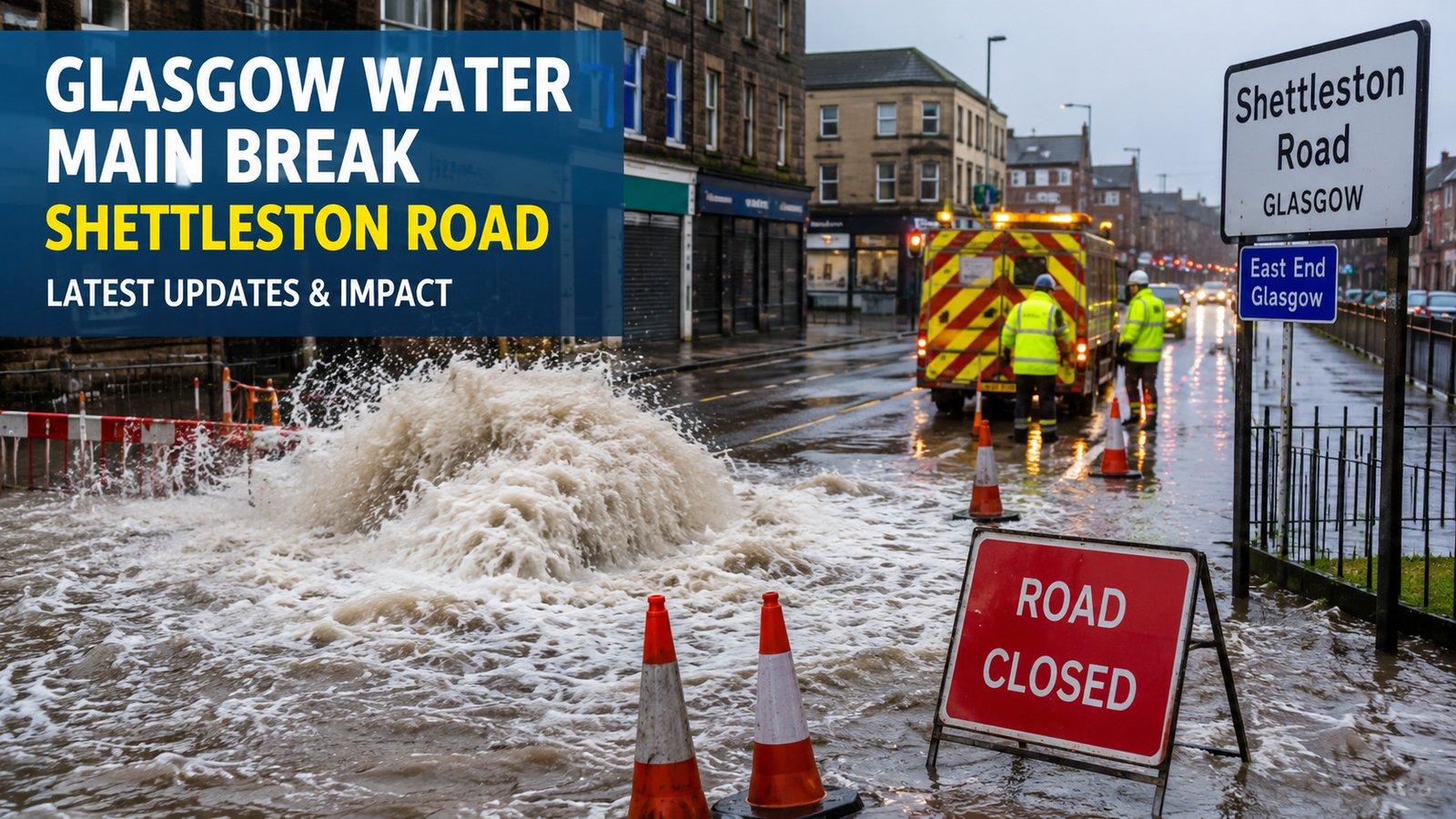
The glasgow water main break shettleston road incident quickly became one of the most discussed infrastructure failures in Glasgow’s East End. What started as a sudden underground pipe rupture soon created widespread disruption across the area. Roads were flooded, traffic slowed to a standstill, and nearby residents faced interruptions to their water supply. For many people living around Shettleston Road, the event was a reminder of how dependent modern cities are on aging systems hidden beneath the streets.
Water main failures are not rare in older cities, but when they occur on busy roads, the impact spreads rapidly. Homes, businesses, transport services, and emergency crews all become affected within hours. In this case, the glasgow water main break shettleston road exposed larger concerns about infrastructure maintenance and the growing pressure on public utility systems across urban Scotland.
The incident also raised questions about whether enough investment is being made to modernize old water networks. Many underground pipes installed decades ago remain in daily use despite increasing traffic loads, changing weather conditions, and rising demand from expanding populations. When these systems fail, the consequences can be expensive, disruptive, and difficult to repair quickly.
What Is glasgow water main break shettleston road
The glasgow water main break shettleston road refers to a major underground pipe failure that occurred on Shettleston Road in Glasgow. A water main is a large pipe responsible for carrying clean water to homes, businesses, schools, and public buildings. When one of these pipes bursts or cracks, large amounts of water can escape rapidly beneath roads and pavements.
In the case of the glasgow water main break shettleston road, the damage caused flooding across sections of the roadway and disrupted local services. Repair crews had to access the underground pipe by excavating the affected area, which created further traffic delays and road restrictions.
Such incidents often develop suddenly. Residents may first notice unusual drops in water pressure, water pooling on roads, or discolored water from taps. Once a major rupture occurs, emergency teams must quickly isolate the damaged section to prevent further flooding and reduce pressure on the surrounding network.
The event became especially important because Shettleston Road is a busy route in Glasgow’s East End. Any major disruption there quickly affects transport, businesses, and nearby residential communities.
Why Aging Water Systems Are Becoming a Serious Problem
The glasgow water main break shettleston road highlighted a growing problem facing many older cities. Much of the underground water infrastructure in Britain was installed generations ago. Some pipes still operating today were originally designed for conditions that no longer exist.
Over time, metal pipes weaken due to corrosion, ground movement, temperature changes, and constant water pressure. Roads above these pipes also experience heavier traffic than they were originally built to support. Large vehicles create continuous vibrations that slowly stress underground systems.
Another major issue is delayed infrastructure replacement. Replacing entire water networks is extremely expensive and often requires disruptive construction work across major roads. Because of this, many utility providers focus on repairing damaged sections rather than replacing complete systems.
The glasgow water main break shettleston road became an example of what can happen when older infrastructure reaches its limit. Even a single burst pipe can create financial losses, public frustration, and transport chaos within a short period.
Climate conditions may also increase future risks. Heavy rainfall, freezing temperatures, and sudden weather shifts place additional stress on aging underground pipes. Cities with older infrastructure are particularly vulnerable to these environmental pressures.
Immediate Effects on Local Residents
For residents living near the affected area, the disruption was immediate and stressful. The glasgow water main break shettleston road caused concerns about water availability, travel delays, and possible property damage.
Some households experienced reduced water pressure while others temporarily lost access to running water entirely. In situations like this, even basic daily activities become difficult. Cooking, cleaning, bathing, and washing clothes all depend on reliable water access.
Many people also worry about water quality after major pipe failures. Sudden pressure changes can disturb sediment inside the system, causing tap water to appear cloudy or discolored. Although this is often temporary, it still creates concern among residents.
Flooded roads and blocked traffic routes added further frustration. Parents taking children to school, workers commuting to jobs, and elderly residents attending appointments all faced delays. Public transport services also experienced disruption due to temporary diversions around the affected area.
The emotional impact of incidents like the glasgow water main break shettleston road is often underestimated. People expect essential services such as clean water to function continuously. When those systems fail unexpectedly, it creates anxiety and uncertainty within the community.
Impact on Businesses Along Shettleston Road
Local businesses often suffer heavily during infrastructure emergencies. The glasgow water main break shettleston road affected shops, cafés, delivery services, and small businesses operating near the flooded area.
Reduced customer access became one of the biggest problems. Traffic congestion and road closures discouraged people from visiting nearby businesses. Some customers avoided the area completely because of delays and confusion.
Businesses that depend heavily on water faced additional challenges. Restaurants, cafés, and cleaning services cannot operate normally when water pressure becomes unreliable. Even temporary interruptions can reduce income during already difficult economic conditions.
Delivery schedules were also affected. Vans and service vehicles struggled to navigate blocked roads, causing delays for both businesses and customers. For smaller independent shops, even a single day of disruption can create noticeable financial pressure.
The glasgow water main break shettleston road showed how closely local economies depend on reliable public infrastructure. A problem occurring underground can quickly affect businesses above ground in ways many people never consider until a crisis develops.
Emergency Repair Operations and Challenges
Repairing a major underground water main is a complicated process that requires speed, coordination, and technical expertise. During the glasgow water main break shettleston road incident, emergency crews had to work quickly to control the situation before conditions worsened.
The first priority during any major pipe failure is stopping water flow to the damaged section. Engineers isolate parts of the network to reduce flooding and prevent further pressure damage. Once the area becomes safer, crews begin excavating the road to reach the broken pipe.
This stage can be difficult in urban areas because roads often contain multiple underground systems close together. Water pipes, gas lines, electrical cables, and telecommunications infrastructure may all exist beneath the same street. Workers must carefully avoid damaging nearby services while carrying out repairs.
Weather conditions can also slow emergency operations. Heavy rain, low temperatures, or unstable ground make excavation more dangerous and technically challenging.
The glasgow water main break shettleston road demonstrated how demanding infrastructure repair work can be. While many residents see only traffic cones and construction equipment, engineers behind the scenes must solve complex structural problems under significant public pressure.
Traffic Chaos and Urban Disruption
One of the most visible effects of the glasgow water main break shettleston road was the disruption to traffic movement. Shettleston Road serves as an important route for commuters, buses, and local transport services. When emergency repairs blocked sections of the road, congestion quickly spread into surrounding streets.
Urban traffic systems depend on consistency. Even a small closure on a busy road can create delays across an entire district. Drivers searching for alternative routes increase pressure on nearby roads that may already operate close to capacity.
Public transport systems also become affected during such incidents. Buses face delays, routes may change temporarily, and passengers experience longer travel times. This creates frustration not only for drivers but for thousands of commuters trying to reach workplaces, schools, or appointments.
The glasgow water main break shettleston road highlighted how interconnected city systems truly are. A burst pipe beneath one road eventually affects transport schedules, local commerce, emergency services, and residential routines across a much wider area.
Public Concerns About Infrastructure Investment
After the incident, many residents began discussing the broader condition of Glasgow’s infrastructure. The glasgow water main break shettleston road raised concerns about whether enough preventative maintenance is being carried out across the city.
Infrastructure problems rarely receive public attention until something fails dramatically. Underground systems remain invisible during normal daily life, which often delays investment decisions. However, once a major burst occurs, the costs of emergency response and repairs can become far greater than preventative maintenance would have been.
Many experts argue that older cities now face a difficult choice. Authorities can continue relying on temporary repairs, or they can invest heavily in modernizing aging systems before failures become more frequent.
Population growth, heavier transport usage, and climate pressures are increasing demands on infrastructure that was designed for a different era. The glasgow water main break shettleston road became a symbol of these larger challenges facing many urban areas throughout Britain.
Lessons Learned From the Incident
The glasgow water main break shettleston road provided important lessons about preparedness, maintenance, and urban planning. One key lesson is the importance of preventative infrastructure monitoring. Detecting weak pipe sections early can reduce the likelihood of sudden catastrophic failures.
Another lesson involves communication. During emergencies, residents want clear information about water restoration, traffic conditions, and repair timelines. Effective communication helps reduce confusion and public frustration.
The incident also demonstrated the importance of infrastructure resilience. Cities need systems capable of handling modern pressures without repeated breakdowns. This requires long-term planning rather than short-term emergency fixes alone.
Technology may help improve future prevention efforts. Modern monitoring equipment can identify leaks, pressure changes, and structural weaknesses before pipes burst completely. As cities continue modernizing infrastructure systems, these tools may become increasingly important.
The glasgow water main break shettleston road also reminded residents that essential services should never be taken for granted. Clean water access depends on complex underground systems that require constant maintenance and investment.
Conclusion
The glasgow water main break shettleston road was far more than a temporary local disruption. It exposed the fragile condition of aging urban infrastructure and demonstrated how quickly essential services can fail under pressure. Roads flooded, traffic stalled, businesses struggled, and residents faced interruptions to daily life within a matter of hours.
Although emergency crews worked to repair the damaged pipe and restore normal conditions, the incident raised larger concerns about infrastructure reliability in Glasgow and other older cities. Underground systems built decades ago are now carrying modern demands they were never originally designed to handle.
The event also showed how interconnected city life has become. A single pipe failure affected transport systems, local commerce, residential communities, and emergency services simultaneously. As urban populations continue growing, the need for long-term infrastructure investment will become even more important.
The glasgow water main break shettleston road may eventually fade from headlines, but the lessons it revealed about maintenance, preparedness, and public infrastructure will remain highly relevant for years to come.
FAQs
What caused the glasgow water main break shettleston road?
The incident was likely caused by aging underground water infrastructure combined with long-term wear, pressure stress, and environmental conditions.
Did residents lose water during the incident?
Yes, some nearby residents experienced low water pressure or temporary interruptions to their water supply while repairs were carried out.
Why did the incident create major traffic delays?
Emergency repair work required road excavation and lane closures, which caused congestion and transport disruption around Shettleston Road.
How do cities repair major water main breaks?
Engineers isolate the damaged pipe, excavate the affected road area, remove broken sections, and install replacement pipe components before restoring service.
Could similar incidents happen again in Glasgow?
Yes, aging infrastructure increases the risk of future water main failures unless long-term maintenance and modernization programs are expanded.

lokumları: The Sweet Legacy of Turkish Delight Across Generations

tatavel: Uncovering the Meaning Behind an Emerging Online Trend

pabington: Exploring the Mystery Behind a Rising Online Phenomenon

riverbank collapse iford playing fields Shocks Local Residents

glasgow water main break shettleston road Sparks Infrastructure Alarm
