
Home Improvement
trifasciata sansevieria: The Resilient Plant Transforming Indoor Spaces

Introduction
Among the many houseplants admired for their beauty and adaptability, trifasciata sansevieria stands in a class of its own. Known for its striking upright leaves, remarkable toughness, and ability to thrive with minimal care, this plant has become a favorite among homeowners, interior designers, and plant enthusiasts worldwide. Whether placed in a modern apartment, a busy office, or a traditional home, it brings a sense of elegance while requiring far less attention than many other ornamental plants.
The growing popularity of trifasciata sansevieria is not simply a result of its attractive appearance. Its resilience, longevity, and adaptability make it one of the most practical indoor plants available today. Even people who struggle to keep plants alive often find success with this species. Beyond aesthetics, it also carries cultural significance and has been associated with prosperity, strength, and protection in various traditions.
As indoor gardening continues to gain popularity, understanding the characteristics, care requirements, and benefits of this remarkable plant becomes increasingly valuable. This article explores every important aspect of trifasciata sansevieria, from its origins and botanical features to cultivation techniques and common misconceptions.
What Is trifasciata sansevieria
Trifasciata sansevieria is a perennial evergreen plant originally native to tropical and subtropical regions of West Africa. It belongs to the Asparagaceae family and is widely recognized by common names such as snake plant, mother-in-law’s tongue, and viper’s bowstring hemp.
The plant is characterized by its sword-shaped leaves that grow vertically from underground rhizomes. These leaves often display beautiful green patterns with lighter horizontal markings, creating a distinctive appearance that makes the plant instantly recognizable.
In recent years, botanical classifications have placed the species under the genus Dracaena, resulting in the scientific name Dracaena trifasciata. However, the traditional name trifasciata sansevieria remains widely used among gardeners, nurseries, and plant collectors across the world.
Its ability to tolerate low light, irregular watering, and varying indoor conditions has earned it a reputation as one of the easiest houseplants to maintain.
The Origin and Natural Habitat of trifasciata sansevieria
The story of trifasciata sansevieria begins in the dry regions of West Africa, particularly in countries such as Nigeria, Congo, and neighboring areas. In its natural environment, the plant grows in rocky terrain, open woodlands, and areas with seasonal drought.
The climate in these regions has shaped the plant’s remarkable survival mechanisms. Its thick leaves store water efficiently, allowing it to endure extended dry periods. The underground rhizomes serve as reservoirs of nutrients and moisture, enabling continued growth even under challenging conditions.
This adaptation to harsh environments explains why the plant performs exceptionally well indoors. Most household conditions are far less demanding than the climates where the species evolved naturally.
Understanding its origins helps gardeners appreciate why overwatering, rather than neglect, is often the greatest threat to the plant’s health.
Distinctive Characteristics of trifasciata sansevieria
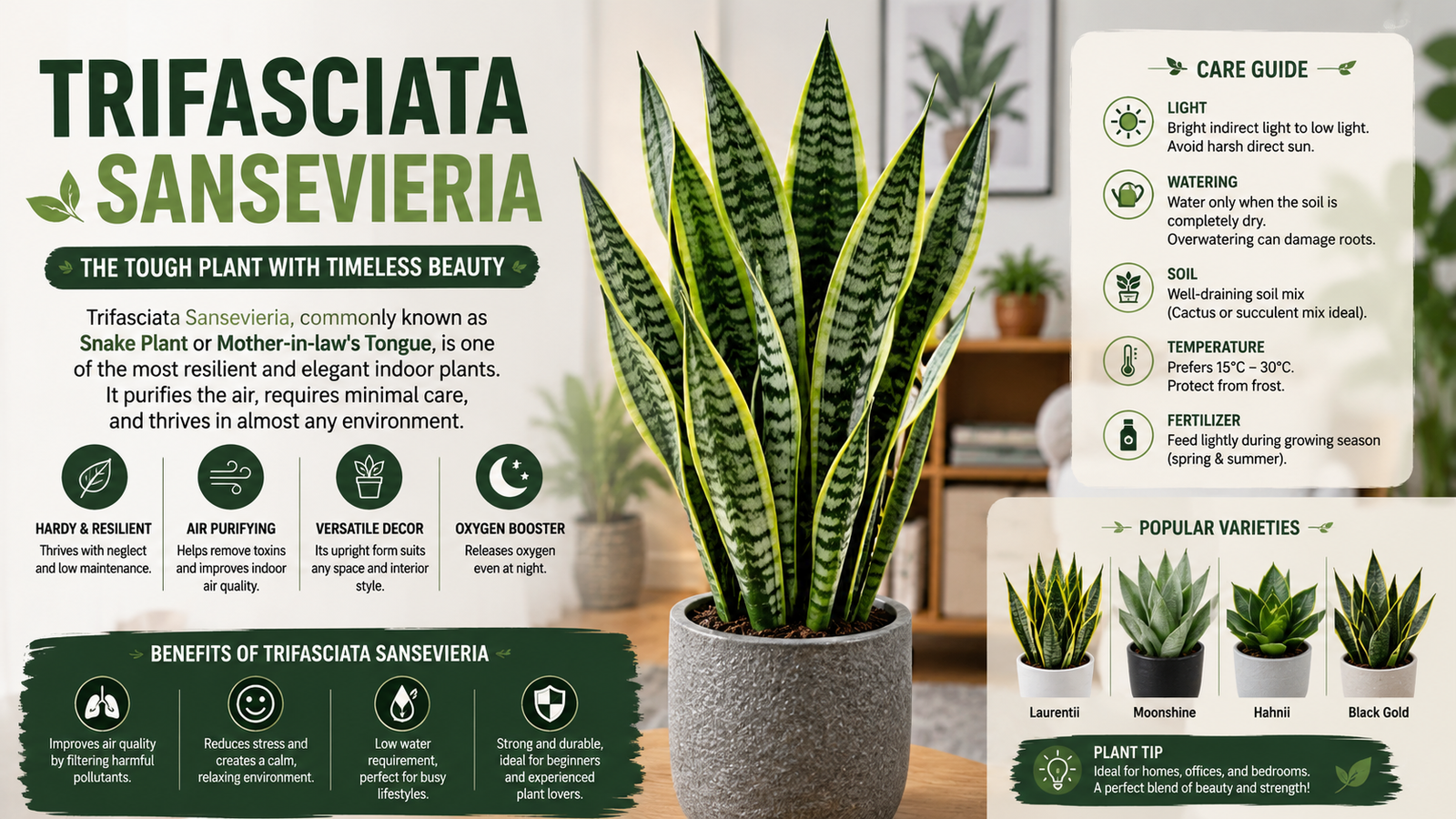
One of the most fascinating aspects of trifasciata sansevieria is its unique physical structure. The leaves grow upright and can vary significantly in height depending on the cultivar. Some varieties remain compact, while others can exceed several feet in height.
The foliage typically displays dark green coloration mixed with lighter horizontal bands. Many cultivated forms feature yellow margins or silver-green patterns that add visual interest.
Unlike many houseplants that spread outward, the vertical growth habit of trifasciata sansevieria makes it ideal for small spaces. Its architectural appearance allows it to function almost like a living sculpture within a room.
The plant occasionally produces fragrant flowers, especially when slightly stressed. These flowers emerge on tall stalks and release a pleasant scent during the evening, although blooming indoors is relatively uncommon.
Popular Varieties of trifasciata sansevieria
Over the years, horticulturists have developed numerous cultivars that showcase different colors, sizes, and growth patterns. Each variety offers a distinct visual appeal while retaining the resilience associated with the species.
Laurentii is perhaps the most recognizable form, featuring green leaves bordered by bright yellow edges. Moonshine displays broad, silvery-green foliage that creates a modern and sophisticated appearance. Hahnii, often called the bird’s nest snake plant, remains compact and forms attractive rosettes.
Some varieties exhibit twisted leaves, while others feature cylindrical foliage. These differences have contributed significantly to the widespread popularity of trifasciata sansevieria, allowing plant lovers to select specimens that suit their individual preferences and interior designs.
Why trifasciata sansevieria Became a Houseplant Favorite
The rise of indoor gardening has introduced many people to houseplants, but few species have achieved the universal appeal of trifasciata sansevieria. Its popularity stems from a combination of practicality and beauty.
Many indoor plants demand frequent watering, precise lighting conditions, and constant monitoring. In contrast, this species thrives with minimal intervention. Busy professionals, students, and frequent travelers often choose it because it can withstand occasional neglect.
The plant’s upright form complements virtually every decorating style, from minimalist interiors to traditional spaces. Its clean lines and structured appearance create a sense of order and sophistication.
This combination of visual appeal and durability explains why the plant consistently ranks among the most recommended houseplants worldwide.
Growing Conditions for Healthy trifasciata sansevieria
Although trifasciata sansevieria is exceptionally forgiving, providing suitable growing conditions helps maximize its health and appearance.
Bright indirect light encourages strong growth and vibrant coloration. However, the plant can also tolerate low-light environments, making it suitable for offices and rooms with limited sunlight. Direct sunlight is generally acceptable in moderation but may occasionally scorch delicate varieties.
The soil should be well-draining. Many gardeners prefer cactus or succulent mixes because they prevent excess moisture from accumulating around the roots.
Temperature stability also contributes to healthy growth. The plant performs best in typical indoor temperatures and should be protected from prolonged exposure to cold conditions.
When these basic requirements are met, trifasciata sansevieria can thrive for many years with minimal maintenance.
Watering and Maintenance Requirements
Perhaps the most important aspect of caring for trifasciata sansevieria involves proper watering practices. Because the plant stores water within its leaves, it requires significantly less frequent watering than many other indoor species.
Allowing the soil to dry completely between watering sessions is generally recommended. Excessive moisture can lead to root rot, which remains the most common cause of plant failure.
Maintenance requirements are remarkably simple. Occasional dusting of the leaves improves appearance and allows better light absorption. Damaged or aging leaves can be removed to maintain a neat presentation.
Fertilization is rarely necessary, although light feeding during active growth periods can support healthy development.
Air Purification and Indoor Benefits
Few houseplants have received as much attention regarding indoor environmental benefits as trifasciata sansevieria. Scientific studies have explored its ability to absorb certain airborne compounds and contribute to healthier indoor environments.
One particularly interesting characteristic is its nighttime oxygen production. While most plants primarily release oxygen during daylight hours, this species continues certain metabolic processes after sunset, making it unique among common houseplants.
Although no plant can single-handedly transform indoor air quality, incorporating greenery into living spaces can create a more pleasant and refreshing atmosphere.
Beyond potential environmental benefits, the psychological effects of indoor plants are well documented. Many people report increased comfort, reduced stress, and greater satisfaction when surrounded by healthy greenery.
Common Problems and How to Prevent Them
Despite its durability, trifasciata sansevieria can occasionally encounter problems. Fortunately, most issues are easy to identify and correct.
Yellowing leaves often indicate excessive watering. Soft or mushy foliage usually suggests root-related problems caused by prolonged moisture exposure.
Pests such as mealybugs and spider mites may occasionally appear, particularly in dry indoor environments. Regular inspection helps detect infestations before they become serious.
Poor growth may result from insufficient light, although the plant often survives even under less-than-ideal conditions. Moving it to a brighter location typically improves vigor and coloration.
Preventive care remains the most effective strategy. Proper watering, adequate drainage, and occasional observation keep most plants healthy and attractive.
Cultural Significance of trifasciata sansevieria
Throughout history, trifasciata sansevieria has held symbolic meaning in various cultures. In some traditions, its upright leaves represent resilience, determination, and protection.
The plant is frequently associated with positive energy and good fortune. Many people place it near entrances, believing it serves as a protective presence within the home.
Its ability to survive adversity has also made it a symbol of endurance and strength. These cultural associations have contributed to its popularity far beyond its horticultural value.
The combination of beauty, symbolism, and practicality gives the plant a unique position among ornamental species.
Conclusion
Trifasciata sansevieria is far more than an ordinary houseplant. Its remarkable adaptability, striking appearance, and historical significance have earned it a place in homes and workplaces around the world. Native to the challenging environments of West Africa, it evolved powerful survival mechanisms that now make it one of the easiest plants to grow indoors.
From its elegant vertical leaves and diverse cultivars to its reputation for resilience and potential indoor benefits, every aspect of this species contributes to its enduring popularity. Whether you are a beginner exploring indoor gardening for the first time or an experienced collector seeking a dependable addition to your collection, trifasciata sansevieria offers lasting value and beauty.
Its ability to thrive where many plants struggle serves as a reminder that strength often comes from adaptation. Few houseplants embody that lesson as effectively as this remarkable species.
FAQs
What is the scientific name of trifasciata sansevieria?
The plant is currently classified as Dracaena trifasciata, although the traditional name trifasciata sansevieria remains widely used.
How often should trifasciata sansevieria be watered?
It should only be watered when the soil is completely dry. Overwatering is the most common cause of problems.
Can trifasciata sansevieria survive in low light?
Yes, it tolerates low-light conditions remarkably well, though brighter indirect light encourages stronger growth.
Is trifasciata sansevieria suitable for beginners?
Absolutely. Its resilience and low-maintenance requirements make it one of the best plants for beginners.
How long can trifasciata sansevieria live?
With proper care, the plant can live for many years, often decades, while continuously producing new growth through its rhizomes.
Introduction
Buying furniture is exciting, but nothing is more frustrating than discovering that a new sofa is too large for the room or a dining table blocks comfortable movement throughout the space. This is why understanding how to measure room for furniture is one of the most important skills in home planning. Proper measurements help prevent costly mistakes, ensure comfortable traffic flow, and create a balanced, attractive living environment.
Many people focus only on furniture dimensions while forgetting the actual room layout, doorways, windows, and walking paths. A room may appear spacious until large furniture pieces are placed inside it. Careful measuring removes guesswork and provides confidence when making purchasing decisions.
Whether you are furnishing a new home, redesigning an existing room, or simply replacing a single piece, learning how to measure room for furniture can save time, money, and frustration. Accurate measurements allow every item to fit naturally while maintaining comfort and functionality.
What Is how to measure room for furniture
How to measure room for furniture refers to the process of accurately determining room dimensions, identifying usable floor space, and evaluating access points before selecting or arranging furniture. The goal is to ensure that furniture fits properly within the room while allowing enough space for movement, visual balance, and everyday activities.
This process involves more than measuring wall lengths. It includes evaluating ceiling height, door widths, window placement, electrical outlets, built-in features, walkways, and traffic patterns. Understanding how to measure room for furniture helps homeowners create spaces that are practical, comfortable, and visually appealing.
Accurate measuring is often the difference between a room that feels welcoming and one that feels cramped or awkward.
Why Measuring Before Buying Furniture Matters
Furniture represents a significant investment, and mistakes can be expensive. A sofa that looks perfect online may dominate a living room once delivered. A bed frame may fit the room technically but leave little space to move around comfortably.
Understanding how to measure room for furniture helps eliminate these risks. Proper measurements allow buyers to compare furniture dimensions with available space before making a purchase. This reduces the likelihood of returns, exchanges, and dissatisfaction.
Beyond practicality, accurate measuring contributes to better design outcomes. Rooms feel more balanced when furniture proportions match the available space. Even expensive furniture can appear out of place when scale is ignored.
A few minutes spent measuring can prevent years of living with an uncomfortable layout.
Essential Tools Needed for Accurate Measurements
Learning how to measure room for furniture begins with having the right tools. Fortunately, most are inexpensive and easy to use.
A quality tape measure remains the most important tool. Measuring tapes provide precise wall-to-wall dimensions and help verify furniture sizes. Graph paper can be useful for sketching layouts, while a notebook allows measurements to be recorded systematically.
Many homeowners also use laser measuring devices because they offer quick and highly accurate readings. These tools are particularly useful in large rooms or spaces with unusual shapes.
A pencil, ruler, and smartphone camera can further assist by documenting room details and creating visual references for future planning.
Measuring the Length and Width of the Room
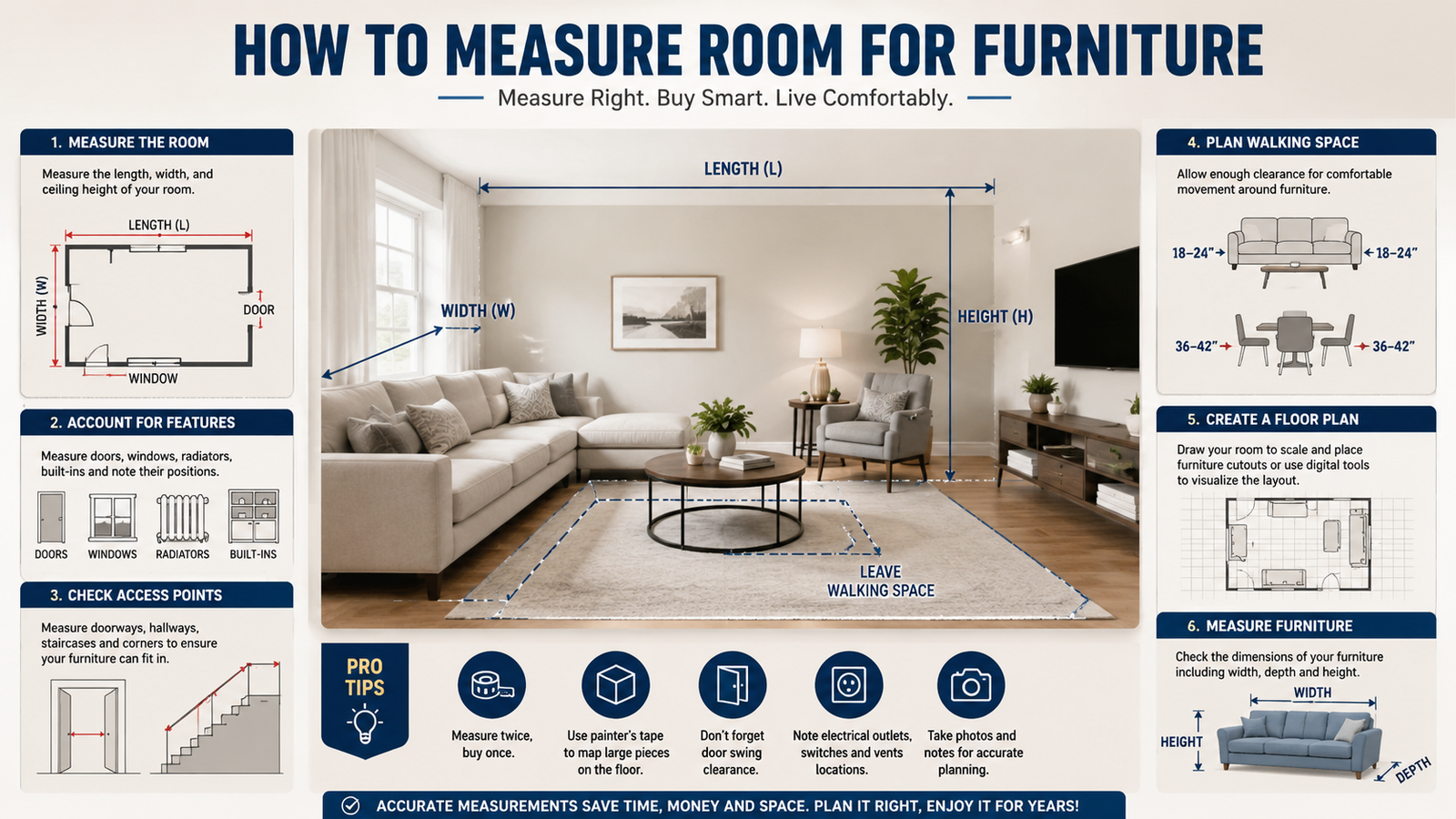
The foundation of how to measure room for furniture begins with determining the room’s overall dimensions. Measure the length of each wall from corner to corner. Repeat the process for the width.
Do not assume opposite walls are identical. Older homes sometimes contain slight variations that can affect furniture placement.
Record all measurements carefully. If the room contains alcoves, bay windows, or irregular shapes, measure these separately rather than estimating.
These dimensions establish the maximum available space and serve as the basis for all future furniture planning decisions.
Accounting for Doors, Windows, and Architectural Features
A common mistake when learning how to measure room for furniture is focusing only on floor dimensions. Architectural elements can significantly reduce usable space.
Doors require clearance for opening and closing. Furniture positioned too close can interfere with daily use. Windows may affect where sofas, desks, or beds can be placed. Radiators, fireplaces, built-in shelving, and columns also influence layout possibilities.
Measure the width and height of these features carefully. Note their exact locations relative to walls and corners.
By including these details in your planning process, you create a realistic representation of the room rather than relying solely on empty floor dimensions.
Understanding Traffic Flow and Walking Space
One of the most overlooked aspects of how to measure room for furniture is ensuring comfortable movement throughout the room.
Furniture should never create obstacles that force people to squeeze through narrow pathways. Comfortable circulation contributes significantly to a room’s functionality and overall feel.
Interior designers often recommend maintaining clear walking paths between major furniture pieces. This allows natural movement while preventing the room from feeling overcrowded.
When measuring, visualize how people will enter, exit, and move around the space. These pathways are just as important as the furniture itself.
Measuring Furniture Dimensions Correctly
Understanding room measurements is only half the process. Equally important is accurately measuring the furniture.
Length, width, and height should all be considered. Many buyers focus exclusively on floor dimensions while overlooking vertical space. Tall bookcases, wardrobes, and entertainment centers may interact with windows, ceiling fixtures, or architectural details.
Measure furniture at its widest points. Reclining chairs require additional space when extended. Dining chairs need room to be pulled out comfortably.
Knowing both room and furniture dimensions ensures compatibility before a purchase is made.
Creating a Floor Plan for Better Visualization
One of the most effective techniques for mastering how to measure room for furniture involves creating a floor plan.
A simple sketch helps visualize furniture placement before items arrive. Draw the room to scale and include doors, windows, and architectural features. Then add furniture dimensions proportionally.
This process reveals potential issues that might otherwise go unnoticed. It becomes easier to evaluate spacing, balance, and functionality.
Even a basic hand-drawn layout can dramatically improve planning accuracy and decision-making.
Considering Room Function When Measuring
Every room serves a different purpose, and this influences how to measure room for furniture effectively.
A living room prioritizes seating arrangements and conversation areas. Bedrooms require comfortable circulation around the bed. Dining rooms must allow sufficient space for chairs and movement during meals.
Measurements should reflect the room’s intended use. A room designed for entertaining may require more open space than a room focused on storage.
Thinking about daily activities helps ensure furniture supports the room’s purpose rather than limiting it.
Measuring Entryways and Delivery Paths
A surprisingly common problem occurs when furniture fits perfectly inside the room but cannot fit through the doorway.
Understanding how to measure room for furniture includes evaluating delivery access. Measure door widths, hallway dimensions, staircases, elevators, and tight corners.
Large sectional sofas, king-size mattresses, and oversized cabinets often present challenges during delivery. These obstacles can turn an exciting purchase into a logistical nightmare.
Verifying access routes beforehand protects against costly surprises and delivery complications.
Common Measurement Mistakes to Avoid
Even experienced homeowners occasionally make errors when measuring rooms.
One frequent mistake is rounding measurements rather than recording exact figures. Small inaccuracies can become significant when dealing with large furniture pieces.
Another mistake involves ignoring clearance requirements. Furniture may technically fit but leave insufficient room for doors, drawers, or comfortable movement.
Some people forget to account for baseboards, molding, and window ledges. Others fail to measure vertical space properly.
Understanding these common pitfalls strengthens your approach to how to measure room for furniture and improves overall planning accuracy.
Using Technology to Improve Measurement Accuracy
Modern technology has simplified many aspects of interior planning. Smartphone applications and laser measuring devices provide fast, reliable results.
These tools can generate room layouts, calculate dimensions, and even simulate furniture placement. While traditional tape measures remain valuable, technology offers additional convenience and precision.
For homeowners working with complex layouts, these innovations make how to measure room for furniture more accessible than ever before.
However, technology should complement—not replace—careful observation and practical judgment.
How Professional Designers Approach Room Measurements
Professional designers rarely rely on visual estimates. They gather extensive measurements before recommending furniture or layouts.
Their process often includes documenting wall dimensions, ceiling heights, electrical outlets, lighting fixtures, and architectural details. They evaluate both aesthetics and functionality.
The reason professionals invest so much time in measuring is simple: accurate information produces better results.
Adopting a similar mindset can dramatically improve your own furniture planning efforts and reduce costly mistakes.
Conclusion
Learning how to measure room for furniture is one of the most valuable skills for creating comfortable, attractive living spaces. Accurate measurements provide clarity, reduce purchasing errors, and help achieve a balanced room design that supports everyday life.
The process extends beyond measuring walls. It involves understanding traffic flow, architectural features, furniture dimensions, and delivery access. Each factor contributes to a successful outcome.
Taking the time to measure carefully transforms furniture shopping from a guessing game into a strategic decision-making process. Whether furnishing a single room or an entire home, precise measurements create confidence and ensure that every piece fits naturally within the space.
When done correctly, measuring is not merely a technical task—it becomes the foundation of smart interior planning.
FAQs
How do I start measuring a room for furniture?
Begin by measuring the length and width of the room from wall to wall and recording the dimensions accurately.
Why is traffic flow important when measuring a room?
Traffic flow ensures people can move comfortably through the space without obstacles or cramped walkways.
Should I measure furniture before purchasing it?
Yes, always compare furniture dimensions with room measurements to confirm a proper fit.
Do I need to measure doorways and hallways?
Absolutely. Large furniture must fit through entry points before it can be placed inside the room.
Can technology help with room measurements?
Yes, laser measuring devices and room-planning apps can improve accuracy and simplify furniture layout planning.
Introduction
In a world increasingly dominated by mass production, handcrafted woodworking remains a powerful reminder of patience, skill, and artistic dedication. Among the many woodworking traditions that continue to thrive, abbey woodworking stands out for its deep connection to craftsmanship, heritage, and purpose. More than simply creating furniture or decorative pieces, abbey woodworking reflects a philosophy that values quality, longevity, and meaningful design.
For centuries, abbeys and monastic communities have played a significant role in preserving traditional crafts. Woodworking became one of the most respected skills within these communities because it combined practical utility with artistic expression. From church furnishings and ceremonial objects to tables, cabinets, and architectural details, the work produced in abbey workshops often demonstrates exceptional attention to detail and enduring beauty.
Today, interest in abbey woodworking continues to grow among collectors, designers, woodworkers, and individuals seeking furniture with character and authenticity. Understanding this tradition provides valuable insight into how craftsmanship can remain relevant in the modern age while honoring centuries of accumulated knowledge.
What Is Abbey Woodworking
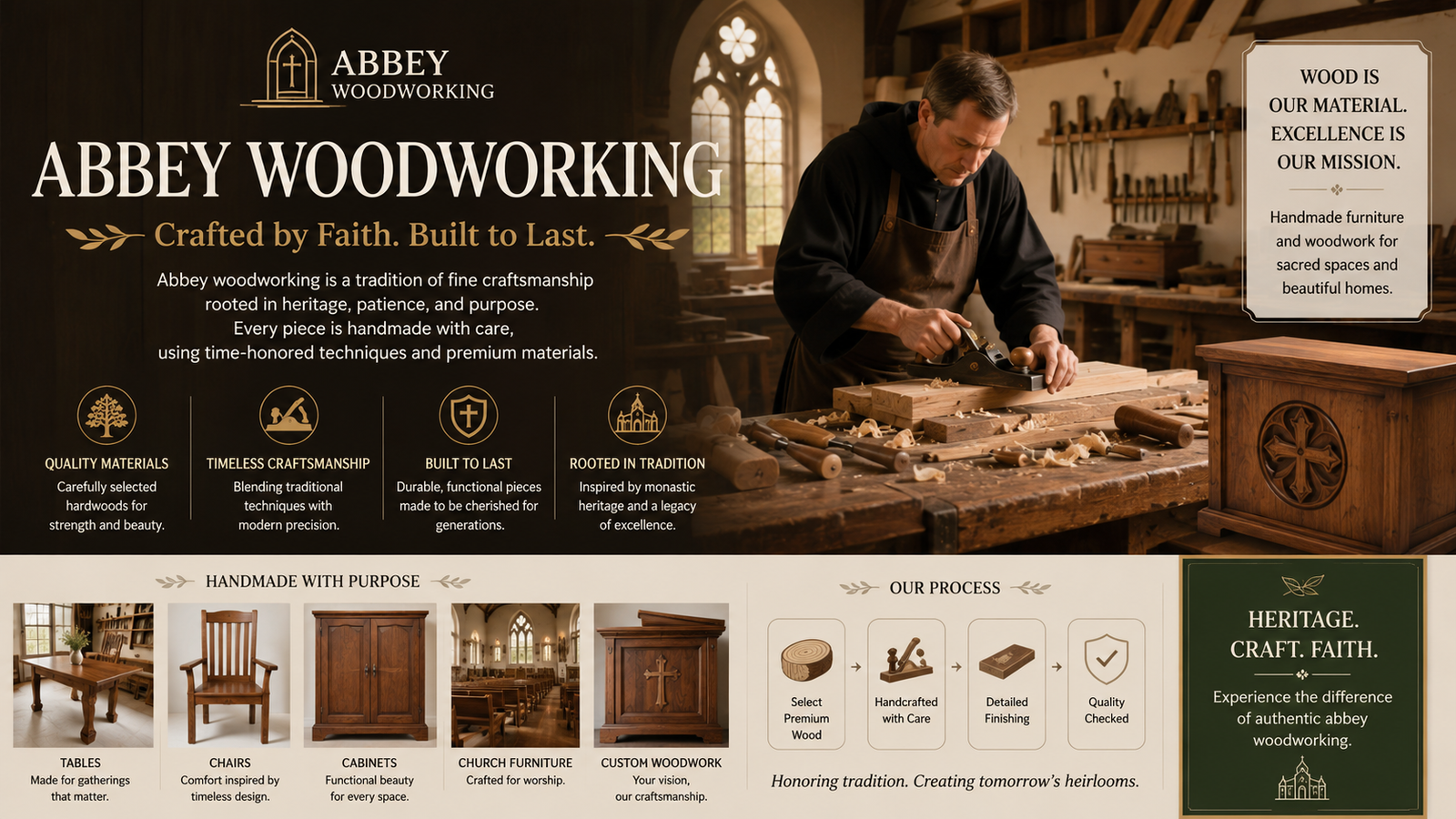
Abbey woodworking refers to woodworking traditions, workshops, and handcrafted wood products associated with abbeys, monasteries, or religious communities. These workshops often focus on producing high-quality furniture, religious furnishings, cabinetry, architectural woodwork, and custom pieces created using traditional techniques.
Unlike factory manufacturing, abbey woodworking emphasizes precision, durability, and craftsmanship. Every piece is carefully designed and constructed, often involving extensive hand-finishing processes. Many abbey woodworking shops operate within religious institutions where craftsmanship is viewed not only as a profession but also as a form of service and dedication.
The result is woodworking that combines practical function with artistic excellence, producing items intended to last for generations rather than years.
The Historical Roots of Abbey Woodworking
The origins of abbey woodworking can be traced back to medieval Europe, when monasteries served as centers of education, craftsmanship, and innovation. During periods when much knowledge was being lost or fragmented, monastic communities preserved important skills through disciplined practice and instruction.
Woodworking became essential within abbeys because monasteries required furniture, doors, shelving, choir stalls, altars, and numerous functional structures. Rather than relying entirely on external craftsmen, many religious communities developed their own workshops where skilled artisans and monks worked together.
Over time, these workshops gained reputations for producing remarkable pieces. Many surviving examples from centuries ago still demonstrate the quality associated with abbey woodworking. Intricate carvings, strong joinery, and carefully selected hardwoods helped establish a standard of excellence that continues to influence modern woodworking.
The Philosophy Behind Abbey Woodworking
One reason abbey woodworking remains admired is the philosophy that guides the craft. Rather than prioritizing speed or volume, craftsmen focus on creating work that reflects patience and integrity.
Each project begins with careful planning. Wood selection is treated as an important stage because different species possess unique characteristics, grain patterns, strengths, and visual qualities. Craftsmen then shape, assemble, and finish the material using techniques developed through years of experience.
This approach reflects a belief that quality work deserves time and attention. The finished product is often viewed as more than an object. It becomes a representation of dedication, discipline, and respect for materials.
Such values explain why many people continue to seek pieces produced through abbey woodworking traditions rather than choosing mass-produced alternatives.
Materials Commonly Used in Abbey Woodworking
The quality of any woodworking project depends significantly on the materials used. Abbey woodworking typically relies on premium hardwoods known for their beauty and durability.
Oak has historically been one of the most important woods in monastic furniture making. Its strength, longevity, and attractive grain make it suitable for everything from tables to architectural features. Walnut is valued for its rich color and elegant appearance, while cherry develops a warm patina as it ages.
Maple, mahogany, and ash are also frequently used depending on project requirements. Craftsmen carefully examine each board to determine how grain patterns will influence both appearance and structural performance.
The thoughtful use of natural materials contributes significantly to the lasting reputation of abbey woodworking.
Traditional Techniques That Define Abbey Woodworking
A defining characteristic of abbey woodworking is the use of traditional construction methods. While modern tools may assist with efficiency, many workshops continue to rely on techniques that have been refined over centuries.
Joinery plays a central role. Mortise-and-tenon joints, dovetails, and other traditional connections provide strength without excessive reliance on metal fasteners. These methods create furniture capable of enduring decades of use.
Hand-planing, carving, shaping, and finishing techniques further distinguish the craft. Rather than hiding natural imperfections, craftsmen often work with the wood’s unique character to create pieces with individuality and charm.
These techniques require patience and expertise, but they produce results that machine-based manufacturing often struggles to replicate.
Furniture Created Through Abbey Woodworking
Furniture represents one of the most recognized products associated with abbey woodworking. Tables, chairs, cabinets, desks, bookshelves, and storage pieces are commonly produced using traditional methods.
What sets these items apart is their combination of functionality and artistry. A chair is designed not only for comfort but also for longevity. A cabinet serves storage needs while showcasing beautiful grain patterns and carefully crafted joinery.
Many pieces feature subtle design elements inspired by historical architecture and religious traditions. Even simple furniture often conveys a sense of permanence and craftsmanship that distinguishes it from contemporary mass-market products.
Because of their quality, furniture pieces produced through abbey woodworking are frequently passed down across generations.
Religious and Liturgical Woodwork
Religious furnishings remain an important part of abbey woodworking. Churches and chapels often require specialized pieces that combine symbolic significance with exceptional craftsmanship.
Altars, pulpits, choir stalls, lecterns, crosses, and ceremonial furnishings demand precise attention to detail. These items serve important spiritual functions and often become focal points within sacred spaces.
Craftsmen responsible for creating such works must balance aesthetics, symbolism, and practical considerations. The resulting pieces frequently demonstrate extraordinary artistry while remaining functional for everyday use.
This aspect of abbey woodworking highlights the unique relationship between craftsmanship and spiritual tradition.
Modern Relevance of Abbey Woodworking
Despite rapid technological change, abbey woodworking remains highly relevant today. Many consumers have become increasingly interested in products that emphasize quality, sustainability, and authenticity.
Mass-produced furniture often prioritizes affordability and speed. In contrast, handcrafted pieces offer durability and uniqueness. Buyers appreciate knowing how an item was made, who created it, and what materials were used.
The growing interest in artisan craftsmanship has renewed appreciation for traditional woodworking methods. Abbey woodworking appeals to individuals who value heritage, craftsmanship, and long-term quality over temporary trends.
As a result, many workshops continue to attract customers seeking furniture and wood products with lasting value.
Sustainability and Responsible Craftsmanship
Sustainability has become an important consideration across many industries, including woodworking. Interestingly, many principles associated with abbey woodworking naturally align with environmentally responsible practices.
Because craftsmen focus on durability, products tend to remain in use for much longer than mass-produced alternatives. This reduces waste and encourages more thoughtful consumption.
Many workshops also emphasize responsible sourcing of timber and careful material utilization. By maximizing the usefulness of each piece of wood and minimizing unnecessary waste, craftsmen contribute to more sustainable production practices.
The emphasis on longevity may be one of the most overlooked environmental benefits associated with traditional woodworking.
Why Collectors Value Abbey Woodworking
Collectors and enthusiasts often seek examples of abbey woodworking because of their exceptional craftsmanship and historical significance. Authentic pieces frequently reflect skills that are becoming increasingly rare in modern manufacturing.
Older works may showcase hand-carved details, traditional joinery, and design influences specific to particular periods or regions. These characteristics make them attractive to historians, museums, and private collectors alike.
Beyond monetary value, collectors appreciate the stories embedded within handcrafted objects. Each piece represents hours of labor, accumulated expertise, and a commitment to quality that transcends changing trends.
For many enthusiasts, owning such work means preserving a small part of an enduring artistic tradition.
The Future of Abbey Woodworking
The future of abbey woodworking appears promising despite challenges facing traditional crafts. Growing appreciation for handmade products has created renewed interest in artisan woodworking and heritage skills.
Educational programs, workshops, and apprenticeships help ensure that knowledge continues to pass from experienced craftsmen to new generations. Modern technology can support these efforts without replacing the core values that define the tradition.
Consumers increasingly recognize the difference between disposable products and items built to last. This shift in perspective benefits woodworking traditions that prioritize quality and craftsmanship.
As long as people value beauty, authenticity, and skilled workmanship, abbey woodworking is likely to remain relevant and respected.
Conclusion
Abbey woodworking represents far more than the creation of furniture and wooden objects. It embodies centuries of craftsmanship, discipline, artistic expression, and respect for materials. Rooted in monastic traditions, this remarkable craft has preserved techniques and values that continue to inspire admiration today.
From carefully selected hardwoods and traditional joinery to religious furnishings and heirloom-quality furniture, abbey woodworking demonstrates what becomes possible when skill and patience guide the creative process. Its emphasis on durability, authenticity, and thoughtful design offers an important alternative to disposable manufacturing.
As appreciation for handcrafted work continues to grow, abbey woodworking stands as a powerful reminder that true craftsmanship never loses its value. The tradition remains a living testament to the enduring relationship between human creativity and the natural beauty of wood.
FAQs
What is abbey woodworking?
Abbey woodworking refers to woodworking traditions and handcrafted wood products associated with abbeys, monasteries, and religious workshops that emphasize quality craftsmanship and traditional techniques.
Why is abbey woodworking highly respected?
It is respected because of its exceptional craftsmanship, durable construction, attention to detail, and historical connection to centuries-old woodworking traditions.
What types of products are made through abbey woodworking?
Common products include furniture, cabinets, tables, chairs, church furnishings, architectural woodwork, and custom handcrafted pieces.
What materials are commonly used in abbey woodworking?
Hardwoods such as oak, walnut, cherry, maple, and ash are frequently used because of their strength, beauty, and longevity.
Is abbey woodworking still relevant today?
Yes, abbey woodworking remains highly relevant because many people value handcrafted quality, sustainable practices, traditional craftsmanship, and furniture designed to last for generations.

lokumları: The Sweet Legacy of Turkish Delight Across Generations

tatavel: Uncovering the Meaning Behind an Emerging Online Trend

pabington: Exploring the Mystery Behind a Rising Online Phenomenon

riverbank collapse iford playing fields Shocks Local Residents

glasgow water main break shettleston road Sparks Infrastructure Alarm
